Stop Remeasuring Loyal Customers.
Your Measurement History Tool
Does the Work Instead.
When a regular customer walks in, your job should begin at cutting – not at the measuring tape. Here is how TailorFit’s customer measurement recorder makes repeat orders effortless.
Download TailorFit →
For Indian tailors and boutique owners, repeat customers are the backbone of the business. Yet most shops still depend on paper registers, scattered notebooks, or memory to recall measurements. When those systems fail – and they do – loyal customers pay the price by standing through an awkward remeasuring session that signals they are not remembered.
This guide explains exactly why this problem happens, what it costs your business, and how a measurement history tool for repeat orders like TailorFit resolves it permanently.
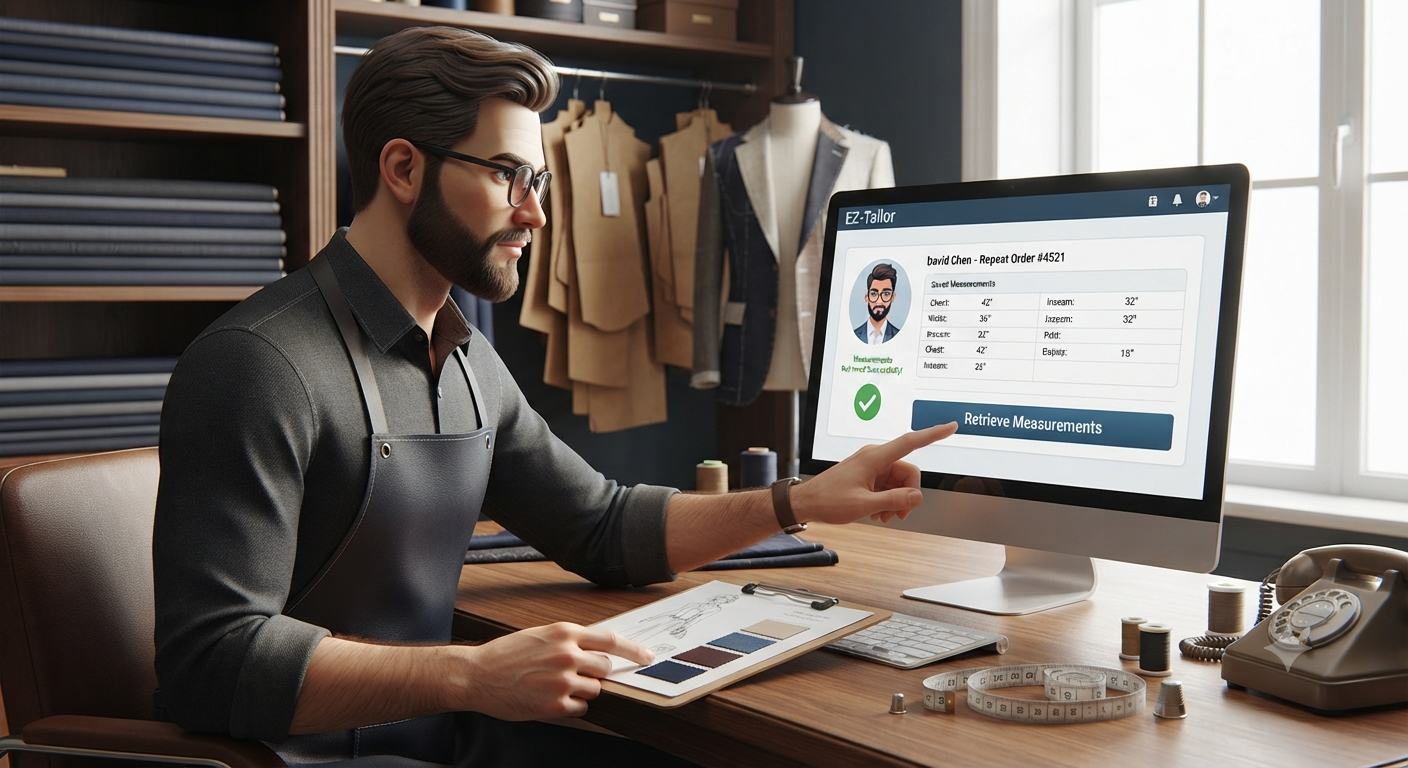
A tailor retrieving saved customer measurements in seconds for a repeat order.
Why Paper Registers Fail Repeat Customers
A paper-based measurement register works acceptably when your client count is under twenty. Once you cross fifty regular customers, the system breaks in predictable ways. Pages get torn or water-damaged. The register from two years ago sits in a storage box. A specific customer’s entry was written on a loose sheet that has since disappeared.
Some tailors maintain separate notebooks per customer – a sensible idea, but one that creates a storage and retrieval problem of its own. Finding the right notebook mid-session, while a customer waits, adds friction that feels unprofessional.
Even digital notes saved in WhatsApp or a basic phone contacts app fail: there is no structure, no search by garment type, and no way to compare measurements across visits. What a tailor actually needs is a customer measurement recorder built specifically for how tailoring businesses work.
What Repeat Customers Actually Experience
From the customer’s perspective, being remeasured on a repeat visit is not a neutral inconvenience. It carries a specific emotional message: you are not important enough to be remembered. For a customer who has been coming to the same tailor for years, this is a meaningful signal that erodes loyalty.
Boutique owners face an additional dimension of this problem. A boutique customer may order five different garments – lehenga, salwar, blouse, kurta, gown – each requiring different measurement sets. Keeping all of these organised and accessible per customer, without a dedicated customer profile for tailor shops, is nearly impossible at scale.
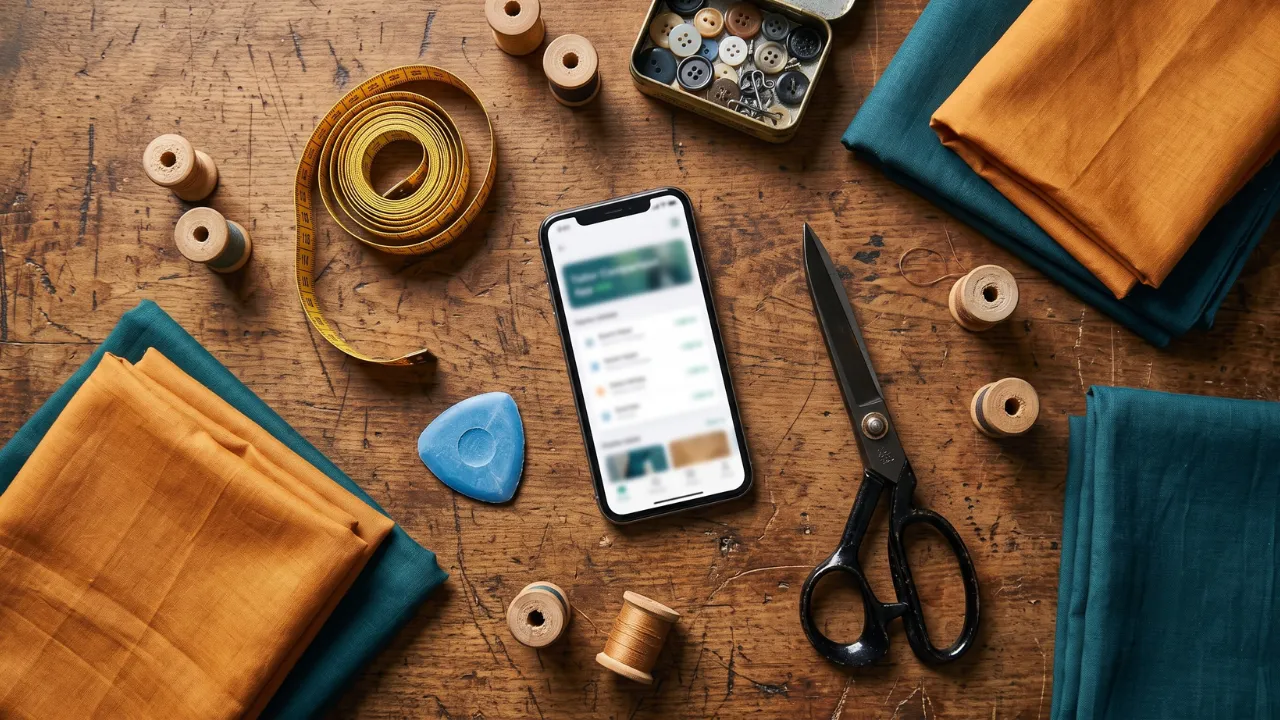
Digital customer profiles allow tailors to retrieve complete measurement history in seconds.
How a Measurement History Tool Solves This
A dedicated measurement history tool stores every customer’s measurements under a permanent, searchable profile. Unlike a notes app or spreadsheet, it is designed around the tailor’s workflow: garment-type-specific fields, timestamped entries, and instant search by name or mobile number.
When a customer returns, you search their name, their profile opens, and their complete measurement history is visible – including which garments you have made for them and when. You do not pick up a tape measure. You open TailorFit, confirm the measurements are unchanged, and move directly to the new order.
What TailorFit’s Customer Profiles Store
- Full body measurements with garment-type categorisation
- Timestamps showing when each measurement set was recorded
- Order history linked to each measurement entry
- Custom notes (posture, fitting preferences, alteration history)
- Contact details for delivery and follow-up reminders
All of this is stored in the cloud and accessible from any device. If you have two workers in the shop, both can pull up the same customer profile without confusion. This is the difference between a digital measurement management system and a paper register – and it is the reason tailors with 200+ clients trust TailorFit over any manual alternative.
How to Set Up Customer Profiles for Repeat Orders in TailorFit
Setting up the system takes under five minutes per customer. Once set up, every subsequent visit saves you the remeasuring step entirely.
- Create a customer profile Open TailorFit and tap Add Customer. Enter the customer’s name, phone number, and any garment-specific notes. This profile persists permanently.
- Enter all measurements Record chest, waist, hip, shoulder, sleeve, and any garment-specific fields. TailorFit timestamps the entry automatically so you always know when measurements were last recorded.
- Link the first order to the profile Create the order and attach it to the customer profile. From this point, all future orders reference the same profile and measurement history.
- Retrieve measurements on repeat visit Search the customer by name or phone number. Their complete measurement profile opens in under 2 seconds – ready to attach to the new order without any remeasuring.
- Update measurements only when needed If the customer requests an adjustment or has had a body change, update only the affected fields. TailorFit retains prior measurement records alongside the updated entry for comparison and reference.
Paper Register vs. Digital Customer Measurement Recorder
| Situation | Paper Register | TailorFit |
|---|---|---|
| Customer returns after 2 years | Measure again – old register missing | Pull up 2-year-old profile in 2 seconds |
| Customer orders 4 different garments | Multiple notebooks, risk of mix-up | Single profile with garment-type fields |
| Two shop staff need the same measurements | Only one person has the register | Both access the same profile on their devices |
| Customer asks what measurements you have | Hunt through pages, hope it’s there | Show the customer their profile instantly |
| Register damaged or lost | All customer data gone permanently | Cloud backup ensures nothing is lost |
| 200+ regular customers | Impractical – retrieval time too high | Searchable in under 2 seconds by name or number |
The Business Case: Why This Affects Your Revenue
Repeat customers are significantly more valuable than new ones. They require no acquisition cost, they trust your work, and they return more frequently. Losing a repeat customer because they felt like a stranger during their visit is an entirely preventable revenue loss.
Consider a tailor with 80 regular clients who visits twice a year on average. If even 15 of those clients switch to a competitor because of a consistently impersonal experience, that represents 30 fewer orders annually – at a conservative ₹800 average, that is ₹24,000 per year in preventable loss from a problem that a app would have solved.
Beyond retention, customer profiles for tailor shops also create upsell opportunities. When you can see a customer’s full order history at a glance, you can proactively suggest seasonal orders, remind them of upcoming occasions, or reference a garment they loved last year. This kind of personalised service is only possible with organised, accessible customer data.
TailorFit also integrates measurement management with delivery date tracking and payment records, giving you a complete picture of each customer’s relationship with your business – not just their measurements.
Never Remeasure a Repeat Customer Again
TailorFit stores permanent measurement profiles for every customer. Set it up once – and every repeat order becomes faster, warmer, and more professional.
Download TailorFit →Who Benefits Most from a Measurement History Tool
Individual Tailors with 50+ Regular Clients
Once your client list crosses 50, paper-based recall becomes unreliable. A digital measurement history tool makes retrieval instantaneous regardless of how many clients you manage – 50 or 500.
Boutique Owners Handling Multiple Garment Types
Boutiques often make lehengas, blouses, salwars, and gowns for the same customer – each with different measurement requirements. TailorFit’s customer profiles support garment-type-specific measurement sets within a single customer record, keeping everything organised without separate notebooks.
Shops with Multiple Staff Members
When more than one person handles orders, shared access to customer profiles prevents measurement errors from inconsistent data. Any staff member can retrieve the correct, current measurements without asking a colleague or hunting through paper records.
Tailors Who Travel to Clients
If you visit clients at home or attend exhibitions and pop-ups, carrying a register is impractical and risky. With TailorFit’s cloud-backed profiles, your entire customer measurement database is on your phone – secure, searchable, and accessible offline.
Building Long-Term Customer Loyalty Through Data
The tailors and boutique owners who retain customers for decades share one observable trait: they make every customer feel known. This is not always about skill – it is about the experience of walking into a shop and being received as a person, not processed as a transaction.
Digital customer profiles for tailor shops are the infrastructure behind that experience. When you greet a returning customer by pulling up their profile before they finish saying their name, you demonstrate that their history with you is preserved and valued. That moment – quiet and practical – is one of the strongest loyalty signals you can deliver.
TailorFit is built to make this possible for every tailor in India, regardless of shop size. The app requires no technical expertise, and takes less time to learn than it takes to fill in a paper register. You can read more about how tailors are adopting digital tools in our guide on managing 200+ client measurements without losing them.
Leave a Reply